2,000 m+Altitude
Max 6Per Private Group
4 to 9 hrsTour Length
PrivateYour Group Only
The mountain is your best training ground in summer.
When the snow is gone, the athletic foundation for winter gets built. Our alpine tours are not scenic walks, they are guided days with a clear conditioning purpose: build endurance, prepare your legs for descending, and get your body ready for the coming ski season. Guided by someone who knows what winter actually demands, you move safely through serious elevation, deep gorges and high suspension bridges across the Tyrolean Alps.
Why hiking in particular works for skiers
The ascent builds your aerobic base, which is the obvious part. The genuinely valuable part is the descent. Going down, your quads work eccentrically: they brake under load instead of pushing. That is exactly the demand every ski turn places on them at the apex of the arc. This is why skiers who spend a summer collecting vertical metres arrive in December not just fitter, but with more resilient knees.
There is a second effect nobody mentions: hours of walking on uneven ground trains ankle and foot stability under fatigue, which is precisely the situation where most mistakes happen in winter.
Altitude Conditioning
Build your engine.
Working above 2,000 metres noticeably improves your endurance capacity. Anyone who spent the summer at altitude feels it on the very first ski day.
Routes for Your Level
Curated tours, not standard trails.
From the peaks of the Karwendel to hidden gorges and suspension bridges, the route is chosen around your fitness and the weather window, not around a brochure.
Biomechanics on Foot
Pacing and joint protection.
You learn a steady walking rhythm uphill and the eccentric braking technique downhill with poles, which takes a significant load off knees and lower back.
Your Group Only
Booked privately, up to 6 people.
On a mountain day, a consistent pace decides everything. In your own group the pace is set by what works for you, not by a stranger.
How a Full Day Tour Runs
So you know what you are signing up for.
06:30
An early start, deliberatelySummer thunderstorms build in the afternoon. Leaving early means being back down in time. That is safety planning, not a preference.
07:00
Kit check and pace agreementBoots, poles, water, forecast. Plus the most important rule of the day: the pace follows the slowest person in the group, from the very first metre.
07:30
Ascent at an even heart rateNot fast, but even. You learn a pace at which you can still talk, because that is what decides how the final vertical metres feel.
11:00
Summit or turnaround pointThe turnaround time is set in advance and it is respected, however close the summit looks. Break, eat, reassess the weather.
12:00
The descent as a training sessionThis is where the ski-relevant work happens. Pole technique and controlled foot placement take load off the knees while training exactly the muscle work you need in winter.
15:00
Hut and debriefA short summary: where your limit was, how much of it was fitness and how much was technique, and what that means for your preparation until winter.
Times are an example. Weather, route and group pace decide the actual shape of the day.
Featured summer tours
- The Tyrolean peaksDemanding ascents with views across the Karwendel and the Zillertal. Focus: sustained vertical gain, ideal for building the conditioning base.
- Gorges and suspension bridgesVaried routes with waterfalls, narrow rock passages and high bridges. Focus: sure-footedness and mental composure, without becoming technical climbing.
- Multi-day hut-to-hut traverseSeveral days linking mountain huts, overnight stays included. Focus: managing your energy across consecutive days, which is exactly what a ski camp demands.
- The late-summer preparation tourScheduled for August and September specifically for skiers, with a high proportion of descending. Focus: eccentric loading and joint stability in good time before the season.
What to bring
- Proper hiking boots with a grip soleTrainers are not enough once it gets steep or damp. Ankle height is considerably safer on scree and roots.
- Telescopic polesThe single most useful item for the descent. If you do not own a pair, let us know beforehand and we bring one.
- Layers rather than one thick jacketAt 2,000 metres the weather can turn from t-shirt conditions to rain and wind within an hour. A rain jacket belongs in the pack even under a blue sky.
- Two litres of water and real foodEnergy bars alone do not carry an eight hour day. Something salty alongside prevents the cramps in the final third.
- Sun protection, including on cloudy daysRadiation at altitude is far stronger than in the valley. Hat, sunglasses and cream are not luxuries.
Your Coach
Who writes the program and reviews your video analysis.
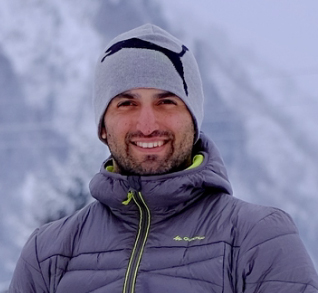
Arash Bakhshesh
Ski Trainer and Biomechanics Coach
English · Deutsch · Farsi
- National Level Experience and Ski Trainer: Former Assistant Coach for a National Alpine Team.
- ÖSSV Level 3 Ski Instructor: Certification from the Austrian Ski Federation.
- Focus: Precision kinematic video analysis and advanced functional conditioning.
Expedition Rates, Per Group
The price is a flat rate for your private group, not per person. Travel, mountain lifts and huts are not included.
The Alpine Ascent
€250
Half-day tour, 4 to 5 hours
- Flat rate for up to 6 people
- Moderate vertical gain
- Pacing and pole technique
- Well suited to active families
Most Popular
The Peak Conqueror
€400
Full-day tour, 7 to 9 hours
- Flat rate for up to 6 people
- High alpine summits and gorges
- Advanced energy management
- Complete route planning
The Summer Traverse
Custom
Multi-day hut-to-hut
- Complete itinerary design
- Hut booking arranged
- Endurance coaching across days
- Also bookable as a team format
Hiking is one half of summer preparation.
The other half is targeted
ski fitness and dryland work, because strength and balance do not appear from vertical metres alone. And once the first snow arrives, the
autumn glacier courses pick it up from there.
Dates depend on the weather. We fix the exact day only two to three days in advance, because a mountain tour in stable conditions is a completely different thing from one under building thunderstorms.
Ski11 Loyalty and Referral Program
Our returning students receive exclusive rewards and special discounts starting on their 6th day of coaching. Refer a new skier and receive credit towards your next training session.
Ready for the summer peaks?
Send us your preferred dates, how many you are and how fit you currently are. We will propose a route that fits, even if it turns out smaller than you had in mind.
Plan Your Expedition
Ask on WhatsApp
Common Questions About the Tours
Click a question to see the answer.
How fit do I need to be for a full day tour?
As a guideline: if you can walk briskly for two to three hours without it becoming a struggle, the half-day tour fits. For the seven to nine hour day you should be doing endurance sport regularly. Tell us honestly where you stand when you enquire and we pick the route accordingly. An overly ambitious tour ruins the day far more reliably than a modest one.
What happens in bad weather?
We only fix the exact date two to three days ahead, and we would rather postpone than go high with thunderstorms building. If postponing is not possible, we switch to a lower, sheltered route. In the mountains, turning around is part of the plan, not a failure.
Does hiking genuinely help my skiing?
For endurance and leg resilience, considerably. The descent trains eccentric strength, which is exactly how your quads work through a turn. What hiking does not replace is ski-specific balance and coordination work, so we recommend running a dryland programme alongside it.
Do I need special equipment?
Proper hiking boots with a grip sole and telescopic poles are the two things that genuinely matter. We can bring poles, we cannot bring boots. Everything else is in the packing list above, and we are happy to go through it with you beforehand.
Are the tours suitable for children or teenagers?
The half-day tour yes, from around ten years old with a sensible route choice. The full day is too long for most children, not because of strength but because of concentration on the descent, and that is exactly where the stumbles happen.
There are more than six of us. Is that possible?
Yes, a second guide joins and we quote individually. Larger groups need more spacing and more breaks in the mountains, so simply attaching them to one guide does not work.
Are huts, mountain lifts and travel included in the price?
No. The flat rate covers the guiding, the route planning and the coaching. Lifts, overnight stays, food and travel are arranged by you. On the multi-day traverse we plan the route and make the hut enquiries, but the costs remain yours.
Do you also guide climbing or glacier tours?
No, and that boundary is deliberate. We guide hiking on marked trails and on pathless but walkable terrain. Anything requiring a rope, a via ferrata set, crampons or glacier travel belongs with a state-certified mountain guide, and we are happy to refer you to one.
Cancellation and refunds
- More than 14 days before the tourCancel free of charge and the full amount comes back to you. No reason needed.
- Between 14 and 7 days beforeHalf the fee is refunded. The day is blocked in the calendar by then and the route planning is done.
- Less than 7 days beforeNo refund. A day that closes at short notice cannot be filled again.
- If we cancel for weather or safetyThen you choose: the full amount back, or a new date. Turning around and postponing are part of this work, and you should never pay for that decision.
Scope and what is not included
What we offer is guided hiking on marked and walkable routes, not climbing, via ferrata or glacier tours. Mountain lifts, huts and overnight stays, food, rental equipment, insurance and travel to and from the region are the responsibility of the participants. Participation is at your own responsibility and a reasonable level of base fitness is assumed.