ÖSSVCertified Austrian Instructor
14+Years Analytical Coaching
PreciseBiomechanical Analysis
OnlineFunctional Training
Bend your knees more. Put your weight on the outside ski.
Both instructions are correct, and most skiers have heard them for years without much changing. When a correct instruction is repeated and the movement still does not arrive, the usual conclusion drawn is a lack of talent or a body that is simply too stiff.
That conclusion is where the method runs out, not where your ability runs out.
The Difference Between Teaching a Sport and Coaching a Human
Instruction and movement analysis are two different jobs. Instruction works from a teaching progression: a defined sequence of movements, demonstrated and then corrected from the side of the piste. It is an efficient method, and for most of what happens in a week on snow it is the right one. What it does not set out to do is establish why one particular body cannot produce one particular movement.
Movement analysis starts one step earlier. No two people share the same bone length, pelvic angles, core strength or spatial awareness, and talent is far less mysterious than it sounds:
talent is largely the speed at which your neuromuscular system adapts to a new movement pattern.
When progress stops, the useful question is which physical limit is blocking the movement, and answering that needs a different tool than a clearer instruction.
The Difference in Approach When Errors Occur
When you lose your balance on a steep slope, what is the response?
Type of Feedback
Instruction names the error.
Movement analysis asks what makes the error unavoidable. If one ankle cannot move freely, the centre of mass goes backwards whatever you are told, so that restriction gets worked on before the turn is corrected at all.
Training Focus
Instruction works through demonstration.
Movement analysis works through explanation. Adults tend to execute a movement properly once they know what it does to the ski, to the snow and to their own joints. When the reasoning lands, the body stops arguing.
Where the Cause Is Sought
Instruction looks at the execution.
Movement analysis looks at the condition behind it. A movement pattern that has not been built yet is not a character flaw, it is a drill that needs breaking into smaller steps.
The Final Result
Repeating a correction that cannot land ends in a plateau.
Clearing the physical limit first is what turns a skier who is fighting the mountain into one who knows what their own body is doing and can repeat it on demand.
The Ski11 Approach: Engineering Your Unique Technique
When you work with an analytical coach, we build the correct neural pathway for your specific body.
1
Biomechanical Scan (Finding the Root)Before any correction is handed out, we look at why your body resists the turn in the first place. Is the limit in ankle mobility, or in the core?
2
Understanding the "Why"Analyzing the physics of the movement for you. Once you understand the logic of leverage and weight distribution, your brain drops its limitations and fears.
3
Targeted DrillsRather than repeating the same run and hoping, we design exercises aimed at the one mechanical limit the scan actually found.
4
Neuromuscular SynchronizationExecuting drills at low speeds to create new muscle memory until the flawed patterns of the past are completely overwritten.
You don't need luck, genetics, or talent; you need a precise motion analysis system to decode your physical potential.
Who wrote this
So you know where these observations come from.
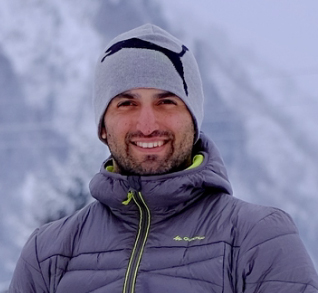
Arash Bakhshesh
Ski Trainer and Biomechanics Coach
English · Deutsch · Farsi
- National Level Experience and Ski Trainer: Former Assistant Coach for a National Alpine Team.
- ÖSSV Level 3 Ski Instructor: Certification from the Austrian Ski Federation.
- Focus: Precision kinematic video analysis and advanced functional conditioning.
Ready to stop struggling on the snow and start engineering your skiing?
If you have been stuck at the same level for years, it is time to change your educational approach. Contact us to design the definitive pathway for you.
Request Analytical Coaching
Contact via WhatsApp
Frequently Asked Questions
Click on any question to view the answer.
What is the difference between booking a ski lesson and booking a movement analysis?
A lesson buys you time on the snow with a qualified instructor and a progression to follow, which is what most skiers need and what most skiers should book. A movement analysis buys the answer to a much narrower question: which physical limit is stopping a particular movement from arriving. It costs more per day, and it earns that only when repetition has already failed. If repetition has not failed yet, save your money.
Is this method only for professional skiers?
No. The earlier the analysis happens, even at beginner level, the fewer compensations there are to unpick later. It suits anyone who wants to progress systematically and keep the load on their joints sensible.
Why has this never come up in my previous ski lessons?
Because it sits outside what the format is built for. An instructor qualification trains you to teach the progression well and safely, to a group, on a schedule. Reading joint kinematics on one individual and rebuilding the training around what you find is a separate specialisation, and an hourly lesson rarely has room for it.
How many sessions does it take to feel a difference?
Understanding usually shifts in the first session, once you can see where the error actually comes from. Execution is slower, and it depends on how old the habit is. In practice it takes a few days of coaching to find the pattern and break it, and after that the repetition is yours to do. The order is the point: first you need to know exactly what the problem is and where it sits, then the practice that fixes it is work you do on your own.
Do I have to fire my current instructor?
Not at all. Our job is not to replace your instructor; our job is to find the mechanical root of your error and prescribe a drill that targets it precisely. Many students return to their regular instructor after this analysis, and this time, the instructor's exercises actually work because the physical barrier has been removed.
Is this analysis possible remotely?
Yes. Most of the work runs on video that you record yourself, alongside a structured set of at-home self-assessments. An in-person session is faster, because corrections are tested on the snow the same hour, though it is not required to get started.
What if the root of the problem is the equipment, not the technique?
This happens far more often than people realize. An improper boot flex, boot sole angle, or ski radius can create the exact same error you thought was a technical flaw for years. If the root lies there, we will tell you honestly and show you how to fix it, even if it means we don't sell you a coaching package.
Are you a doctor or a physiotherapist?
No, and this distinction is crucial. We analyze "movement patterns," not tissue health. We do not diagnose injuries or treat pain. If your movement limitation is medical in nature, it must first be cleared by a doctor or physiotherapist, and our work begins only after their approval.
How do I know this isn't just a marketing claim?
Because the output of our work is measurable. At the beginning, your current state is recorded, and at the end, the exact same assessments are repeated. If there is no visible difference in the video and the numbers, there is no claim. Instead of making promises, we show you the "before and after."